
Chemical Peels vs. Resurfacing Treatments: What’s the Difference?

There are countless treatments available for achieving smoother, healthier-looking skin, but two popular choices are chemical peels and resurfacing treatments. While both aim to improve skin texture, tone, and overall appearance, they work in different ways and target different skin concerns. Understanding the differences between the two can help you choose the treatment that best suits your skin.
What is a Chemical Peel?
A chemical peel is a gentle, non-surgical procedure that applies a chemical solution to exfoliate and shed the skin’s outer layers. Depending on the strength of the chemical peel, it can target superficial, moderate, or deeper skin concerns. The process works by exfoliating the damaged outer skin, revealing fresher, smoother skin underneath.
Chemical peels are commonly used to address:
- Fine lines and wrinkles
- Sun damage and age spots
- Acne scars and blemishes
- Uneven skin tone
- Mild hyperpigmentation
Three main chemical peels:
- Superficial Peels: These use mild acids, such as alpha-hydroxy acids (AHAs), to gently exfoliate the outermost layer of skin. Recovery time is minimal, and there may be only slight redness or flaking after treatment.
- Medium Peels: Using trichloroacetic acid (TCA) or stronger AHAs, medium peels penetrate deeper layers of skin to address more noticeable wrinkles and pigmentation issues. Recovery typically takes a few days to a week.
- Deep Peels: These are the most intensive, often using phenol, and target deep wrinkles, severe sun damage, or significant scarring. Deep peels require longer recovery and careful aftercare.
Chemical peels are particularly effective for patients looking for gradual improvement with minimal downtime, though repeated sessions may be needed to get desired results.
What are Resurfacing Treatments?
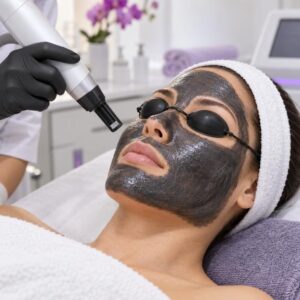
Resurfacing treatments, often referred to as laser or energy-based skin resurfacing, involve using specialized devices to remove damaged skin and stimulate collagen production. Unlike chemical peels, which rely on a chemical solution, resurfacing treatments employ controlled heat or light energy to reach deeper layers of the skin.
Skin Concerns Resurfacing treatments can address:
- Deep wrinkles and fine lines
- Acne and surgical scars
- Sun damage and age spots
- Uneven skin texture
- Skin laxity and mild sagging
Resurfacing treatments:
- Ablative Lasers: These lasers remove the outer layers of skin, making them highly effective for deeper wrinkles and significant skin imperfections. Recovery time is longer, and redness and swelling may occur, persisting for several days or even weeks in some cases.
- Non-Ablative Lasers: These treatments work beneath the surface without removing the skin’s top layers. They stimulate collagen production and gradually improve skin tone and texture with minimal downtime.
- Fractional Resurfacing: A hybrid approach, fractional lasers treat small portions of the skin at a time, allowing faster healing and effective treatment for scarring and pigmentation.
Resurfacing treatments tend to provide longer-lasting results compared to superficial chemical peels, especially for deeper skin concerns. However, they can be more expensive and may require longer recovery periods.
Key Differences Between Chemical Peels and Resurfacing Treatments
While both chemical peels and resurfacing treatments aim to rejuvenate the skin, there are several key differences to consider:
- Depth of Treatment: Chemical peels vary from superficial to deep, primarily targeting the outer layers of skin. Resurfacing treatments can penetrate deeper layers, promoting collagen remodeling and more dramatic results.
- Method: Chemical peels rely on chemical exfoliation, whereas resurfacing treatments use laser or energy-based devices to remove and remodel the skin.
- Recovery Time: Superficial chemical peels require minimal downtime, while deep peels and ablative laser resurfacing may involve longer recovery periods. Non-ablative laser treatments offer minimal downtime.
- Skin Concerns Addressed: Chemical peels are excellent for mild to moderate skin imperfections, while resurfacing treatments are often better for more significant wrinkles, scarring, and skin texture issues.
- Cost and Frequency: Chemical peels are generally less expensive but may require multiple treatments. Resurfacing treatments can provide longer-lasting results but usually come with higher upfront costs.
Which Treatment is Right for You?
Choosing between a chemical peel and a resurfacing treatment depends on your individual skin concerns, goals, and lifestyle. If you are looking for gradual improvements with minimal downtime, chemical peels may be the ideal option. On the other hand, if you want more dramatic results, particularly for deeper wrinkles or significant scarring, resurfacing treatments could be the better choice.
Consultation with a skincare professional is necessary. By reviewing your skin, concerns, and medical background, they can design the most effective approach for your needs. Often, combining both approaches, starting with chemical peels and incorporating resurfacing treatments, can provide optimal results.
NOVA DERM INSTITUTE Perspective
At NOVA DERM INSTITUTE, we understand that every patient’s skin is unique. That’s why we offer both chemical peels and advanced resurfacing treatments tailored to your specific needs. Our team works with you to determine the best approach for achieving smoother, more radiant skin. Whether you’re seeking a gentle peel to refresh your complexion or a resurfacing treatment for deeper rejuvenation, NOVA DERM INSTITUTE is here to walk you through every step, ensuring safe, effective, and lasting results.
Share It.
Recent Posts

Dry Skin vs. Dehydrated Skin: What’s the Difference?
September 1, 2026

How to Get Brighter-Looking Under-Eyes With the Right Skincare Routine
September 1, 2026

How Exfoliating Pads Can Help Manage Acne-Prone Skin
September 1, 2026

Why SPF 50 Should Be Part of Your Daily Skincare Routine
September 1, 2026
